
Energy Statements & Planning
An energy statement is a technical planning document that demonstrates how a development will reduce its energy use and carbon emissions beyond the minimum required by Building Regulations. Most planning authorities require one for major developments, and without it, a planning application can be delayed or refused regardless of how sound the rest of the design is.
The underlying work is usually the same Part L calculation we’d be doing anyway, to demonstrate carbon and energy reduction and the contribution from renewables. What changes is the format, and in some cases what else gets added on top, TM54 operational energy modelling, overheating assessment, or daylight analysis, depending on who you’re submitting to.
Which Energy Statement Does Your Project Need?
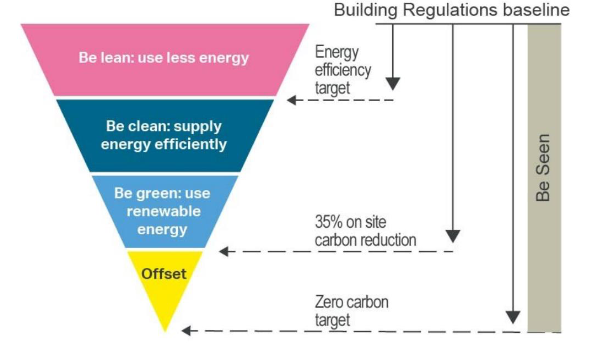
Developments in Greater London: assessed against the GLA’s energy hierarchy, be lean, be clean, be green, be seen, set out in the GLA’s own Energy Assessment Guidance. This has its own specific structure and reporting requirements, separate from any other local authority’s policy.
Developments outside London: assessed against your local planning authority’s own energy or sustainability policy, and these vary significantly. Birmingham, for example, expects a percentage improvement over Part L through its own local policy and generally expects some form of low or zero carbon technology to be included. Bristol’s policy instead requires a set percentage of carbon dioxide savings to come specifically from on-site renewables. Two councils, two different numbers, two different structures, and that’s typical rather than the exception.
School projects: energy assessments for DfE-procured school developments, following the Department’s Output Specification. This covers more than a standard energy statement, TM54 operational energy modelling, Part L compliance, overheating risk assessment, and daylight modelling are all required as part of the same technical package.
Not sure which applies to your project? Get in touch and we’ll confirm the right route before any modelling starts.
Does your project need something else?